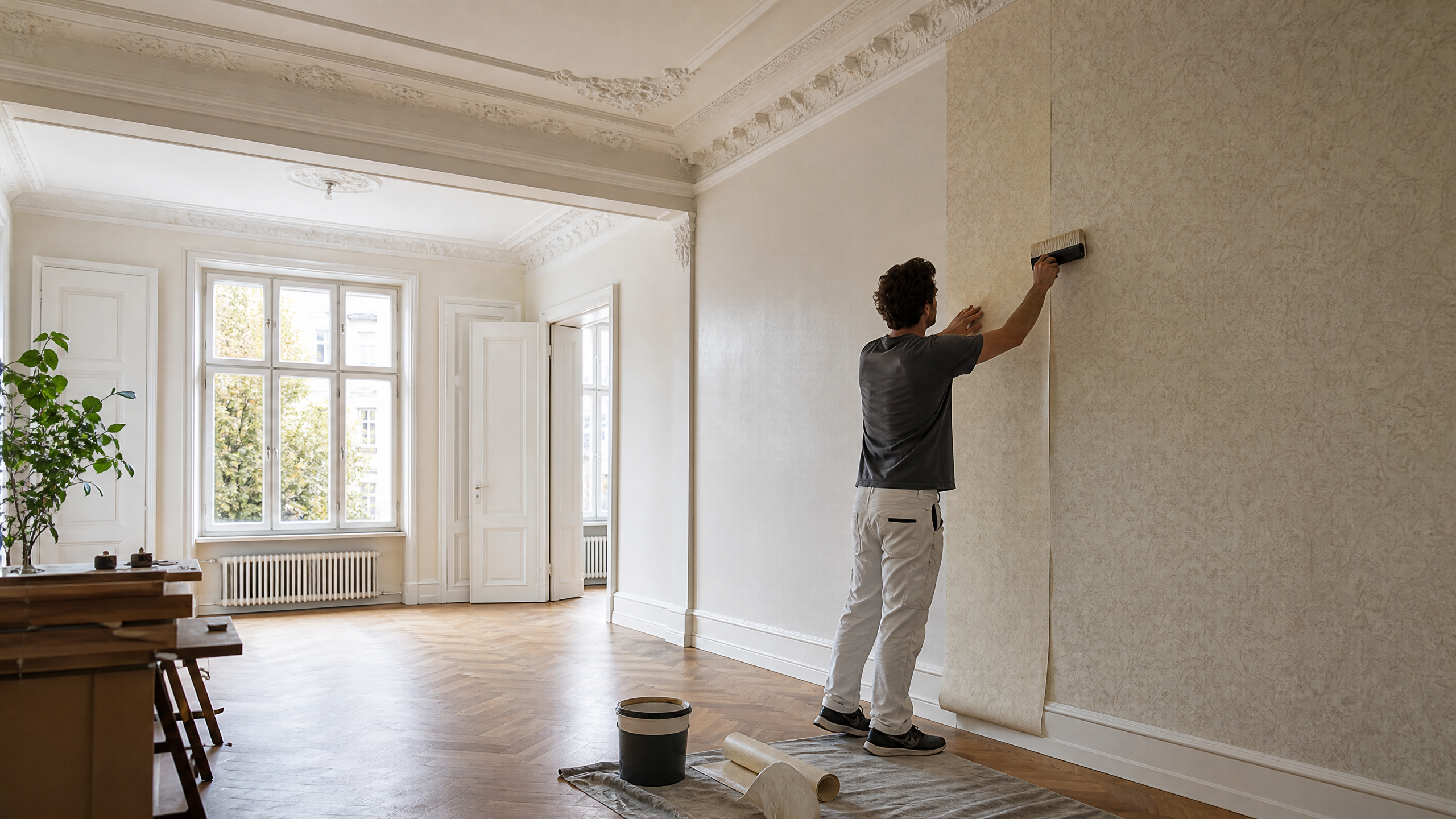
Wallpaper can add depth, rhythm and a sense of craft to an interior. In a Berlin Altbau, it can also complement details that make these homes distinctive: generous ceiling heights, mouldings, original doors and long sight lines between rooms. The key is to choose a material and pattern that suit both the room’s architecture and the way the space is used every day.
The decision should start with the wall itself. Older surfaces may have layers of previous finishes, small irregularities or repairs that affect the final result. Careful preparation is just as important as the wallpaper selection. Homeowners considering professional wallpapering in Charlottenburg can use an on-site review to understand what preparation the particular walls require.
Match the material to the room
Wallpaper comes in many forms, and each has a different character. Plain lining papers can create a uniform base for paint, while textured papers bring subtle shadow and tactility. Non-woven wallpapers are often chosen for their handling properties and range of designs. Patterned paper can become a focal point, especially on a single wall or in a compact room where it is seen at close range.
Think about maintenance as well as appearance. A hallway, kitchen-adjacent area or family room may need a surface that tolerates more contact than a quiet bedroom. Bathrooms and areas with high humidity need particular care: ventilation, wall condition and the suitability of the chosen material should all be considered before installation.
Use pattern in proportion to the architecture
A large motif can look striking in a room with generous scale, but it can feel overwhelming when it competes with several existing features. Smaller patterns create a different effect and can reward closer inspection. Stripes may draw attention to height, while organic patterns can soften a room with straight architectural lines. The most successful choice is often one that has enough presence to be interesting without making the room feel busy.
Order samples rather than relying on an online image. Place them against skirting, doors, curtains and flooring, and view them in daylight and artificial light. If pattern alignment, surface condition or a complex room shape raises questions, help with wallpaper selection and installation provides a practical route from initial preference to a properly prepared wall.
Preparation determines the finish
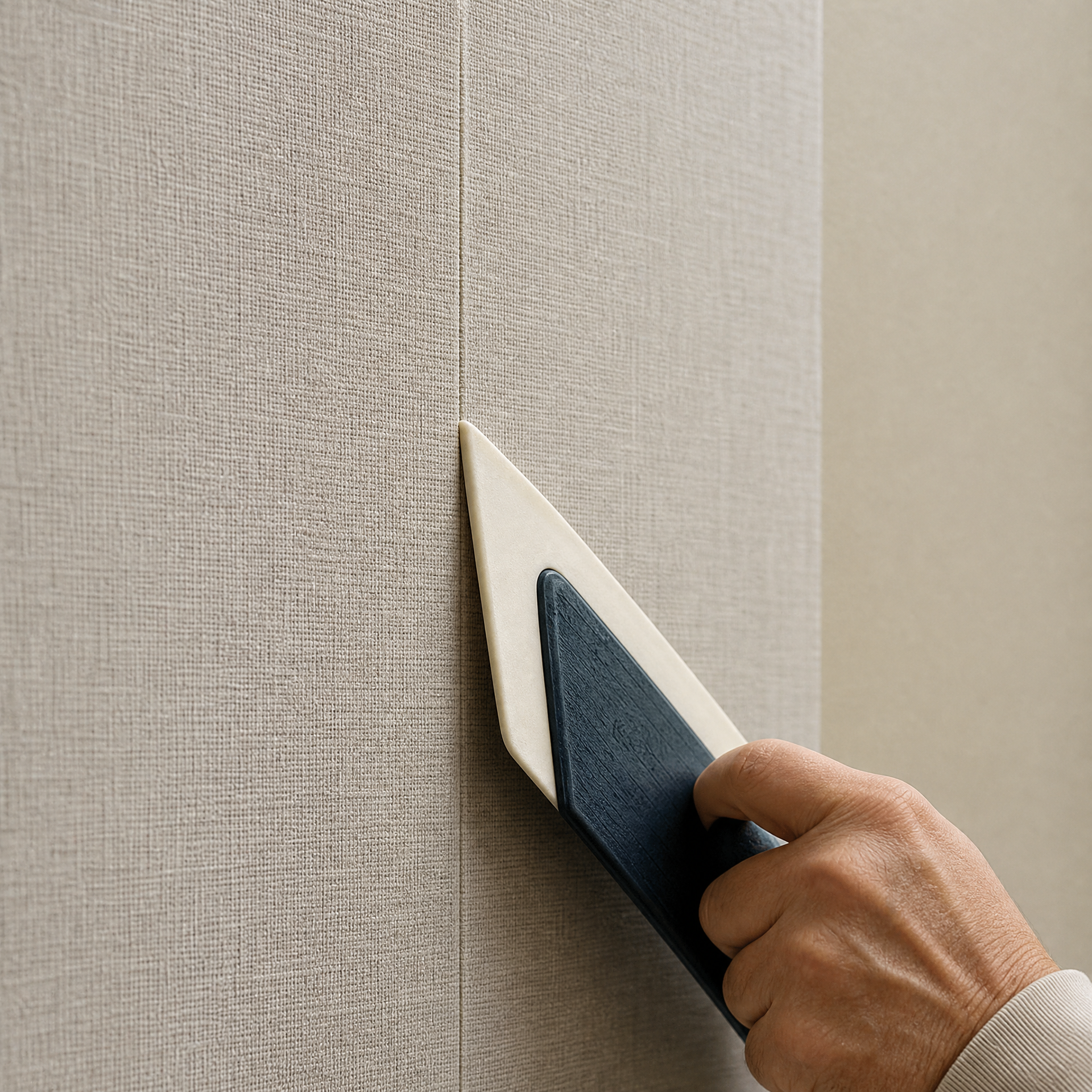
Wallpaper shows the surface underneath it. Loose paint, uneven repairs, dirt and old adhesive can all affect adhesion and appearance. A good preparation phase may include removing old coverings, stabilising the substrate, filling imperfections and applying an appropriate lining or primer. Corners, doorways, sockets and architectural details need particular attention if seams and pattern repeats are to look considered.
Do not rush this stage to shorten the project. The wall preparation is where a careful installation earns its longevity. When comparing work scopes, look for clear wording about surface assessment, protection of the room, removal of existing layers where needed and finishing around edges and details.
Coordinate wallpaper with the rest of the room
Wallpaper does not have to cover all four walls to make an impact. Used on one wall, inside a recess or above a dado line, it can provide texture while allowing paint colours to support the design. Repeating one shade from the wallpaper in a cushion, curtain or adjacent paint tone helps the room feel settled.
A well-chosen paper respects both the building and the people using it. It turns a wall into part of the room’s character without demanding constant attention. For a precise result, homeowners can consult experienced Berlin wallpapering specialists about material choice, surface preparation and the details that shape the finished room.